

I. Expanding Asia-Pacific Shipping Routes to Consolidate the Regional Maritime Transshipment Hub
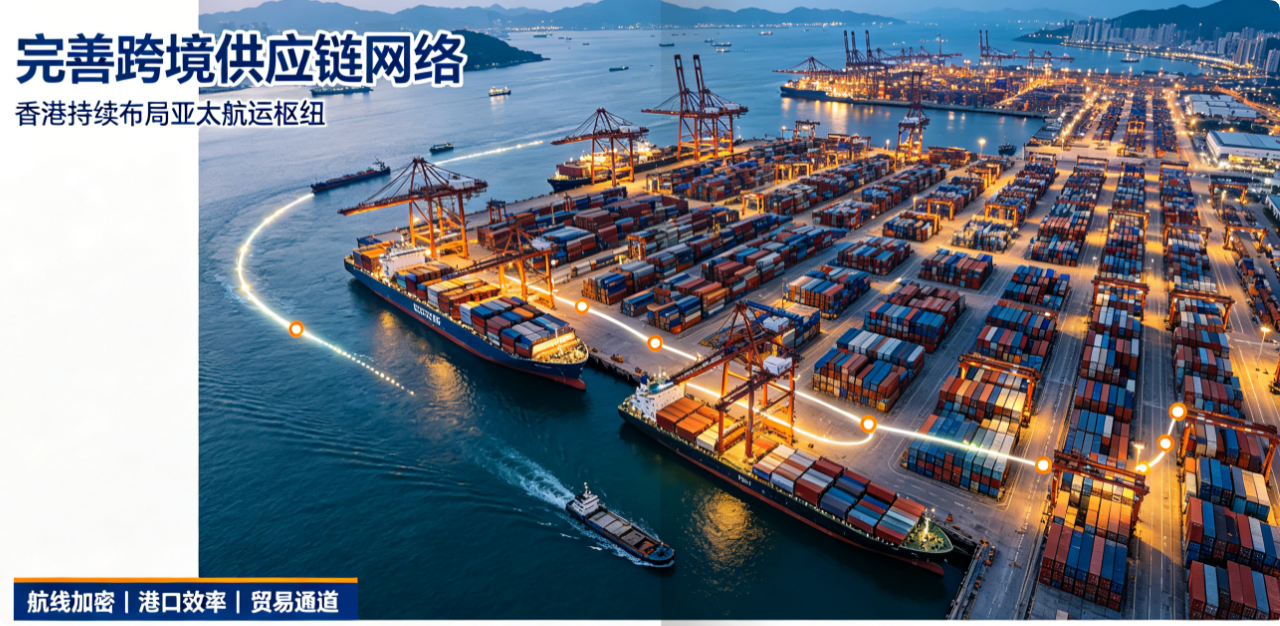
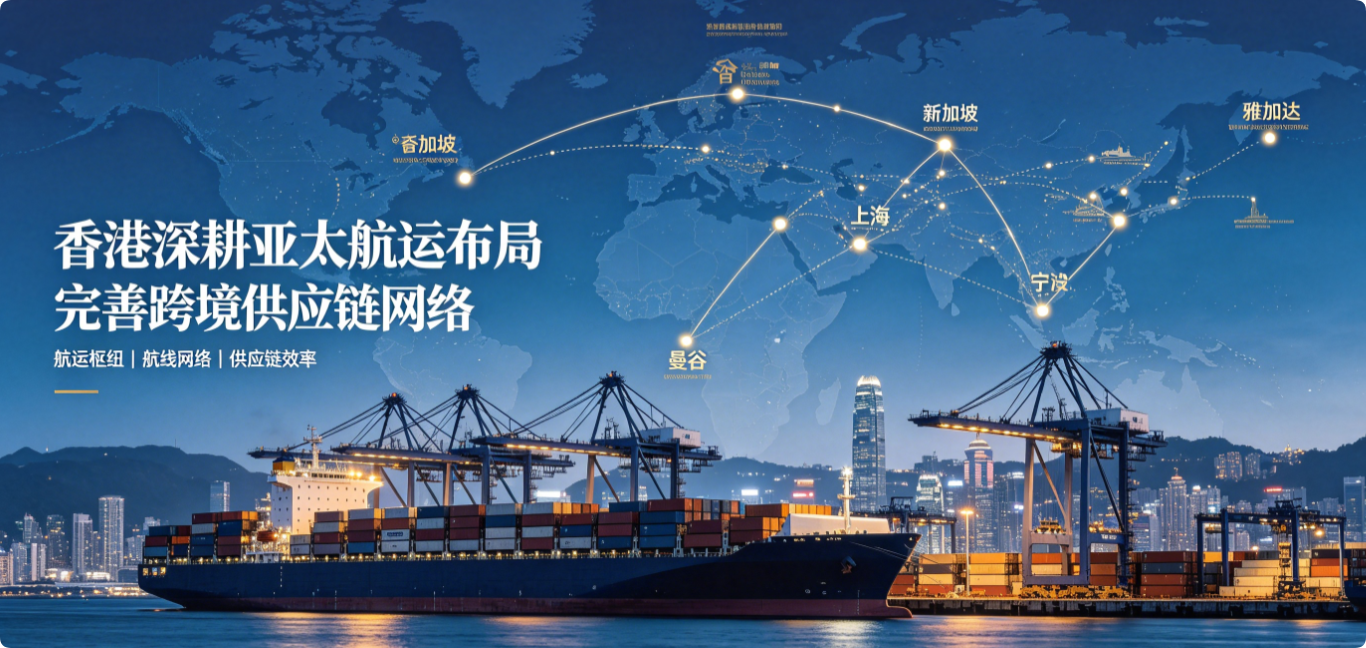
In recent years, major international shipping companies have ramped up their route deployments in Hong Kong. Leveraging the Kwai Tsing deep-water port cluster, Hong Kong has kept expanding short-sea trunk lines and ocean-going routes connecting Southeast Asia, South Asia and Northeast Asia, further strengthening its radiation capacity as a major regional transshipment port.
On the one hand, Hong Kong has deepened cooperation on daily barge shipping services with the Beibu Gulf in Guangxi, opening up an outbound gateway for the New International Land-Sea Trade Corridor. Cargo from inland central and western regions can be consolidated by rail and transported directly to Hong Kong via barges for global transshipment. Thanks to multiple rail-sea intermodal freight trains such as the Chongqing-Shenzhen-Hong Kong line, goods originating from the Chengdu-Chongqing region can arrive at Hong Kong ports within three days, effectively expanding the port’s economic hinterland. On the other hand, Hong Kong has launched more weekly shipping routes linking core ASEAN economies including Vietnam, Thailand, Indonesia, Singapore and Bangladesh. Benefiting from the free port’s efficient customs clearance and comprehensive cold-chain warehousing facilities, Hong Kong handles massive transshipment businesses for high-value electronic products, fresh produce and bulk commodities, greatly shortening the transit time of cross-border goods across the Asia-Pacific region.
Meanwhile, Hong Kong has joined hands with Shenzhen and Guangzhou to build the Guangdong-Hong Kong-Macao Greater Bay Area port cluster. Under the combined port customs clearance model, terminals can share data and facilitate efficient cargo circulation. The enhanced synergy among regional port groups has further consolidated Hong Kong’s core position as a transshipment hub within the Asia-Pacific shipping network.
II. Digital Upgrade of Smart Ports to Connect Cross-border Logistics Data Chains
To meet the demand for efficient cross-border supply chain operations, Hong Kong has fully rolled out the Port Community System (PCS). It enables one-stop cargo information inquiry and one-click customs declaration across sea, air and land transport, and connects with China’s International Trade Single Window. This eliminates repeated form-filing for enterprises, significantly cutting time and labor costs in cross-border logistics, while end-to-end cargo tracking has become an industry standard.
By deploying automated terminal equipment and AI yard dispatching systems, operational efficiency at Hong Kong’s ports has improved by around 20%, enabling efficient berthing and loading/unloading for large container vessels. The digital infrastructure breaks down data barriers among shipping lines, freight forwarders, warehousing providers and trading firms, realizing full-chain collaboration covering orders, customs clearance, warehousing and ocean transportation. It not only strengthens supply chain resilience for foreign trade enterprises but also attracts numerous multinational corporations to set up their regional supply chain management centers in Hong Kong.
III. Developing High-value Green Shipping Sectors to Improve the Supply Chain Service Ecosystem
Hong Kong is accelerating its development into an Asia-Pacific bunkering hub for eco-friendly marine fuels, with regular provision of LNG and green methanol bunkering services. Supported by preferential tax policies for the shipping industry, Hong Kong has gathered high-value maritime sectors including shipowning, ship leasing, marine insurance and shipping arbitration, transforming itself from a traditional cargo transshipment hub into a world-class provider of high-end maritime services.
Backed by sophisticated maritime finance and legal services, Hong Kong delivers integrated solutions covering ship financing, cargo insurance, trade settlement and commercial arbitration for Asia-Pacific cross-border trade, addressing pain points related to capital, risk control and compliance in global supply chains. Driven by regional industrial relocation and the continuous benefits brought by RCEP tariff reductions, a growing number of Chinese enterprises going global and ASEAN firms tapping into the Chinese market choose Hong Kong as their supply chain transshipment and risk management hub, fueling steady growth in two-way cross-border logistics demand.
IV. Building Multimodal Transport Networks to Extend the Geographic Reach of Supply Chains
Moving beyond reliance solely on seaport operations, Hong Kong has constructed a three-dimensional multimodal transport network integrating railway, ocean shipping, highway and inland waterway transport, stretching its logistics coverage from coastal ports to inland provinces in central and western China as well as landlocked cities across the Indochinese Peninsula.
Leveraging international land corridors such as the China-Laos Railway and the Pan-Asia Railway, Hong Kong achieves seamless rail-sea intermodal connectivity. Inland cargo from Southeast Asia can be shipped globally via Hong Kong ports, while goods from inland central and western China can be delivered to ASEAN nations through cross-border freight trains departing from Hong Kong. Compensating for the geographic limitations of pure maritime transport, this integrated logistics model expands the coverage of cross-border supply chains and facilitates in-depth integration of regional industrial and supply chains.
V. Industry Outlook
Against the backdrop of regional restructuring in global supply chains, Hong Kong continues to deepen its presence in the Asia-Pacific shipping sector by virtue of its institutional advantages, strategic geographic location and professional service capabilities. Moving forward, Hong Kong will further optimize shipping route layouts, upgrade smart and green port infrastructure, strengthen port collaboration within the Greater Bay Area and expand multimodal transport services. By continuously improving its cross-border supply chain service capacity, Hong Kong will remain a vital gateway connecting mainland China with the Asia-Pacific and the rest of the world, consolidating its status as an international shipping center and regional supply chain hub and injecting robust logistics momentum into the economic and trade integration of the Asia-Pacific region.