

US Tech Giants Lead Again: Apple Hits a Record High as Structural Opportunities Emerge in a Divided Market
Keywords: U.S. stocks, tech stocks, Apple, Microsoft, Google, Meta, Amazon, Nvidia, SpaceX, market divergence, AI rally
Introduction
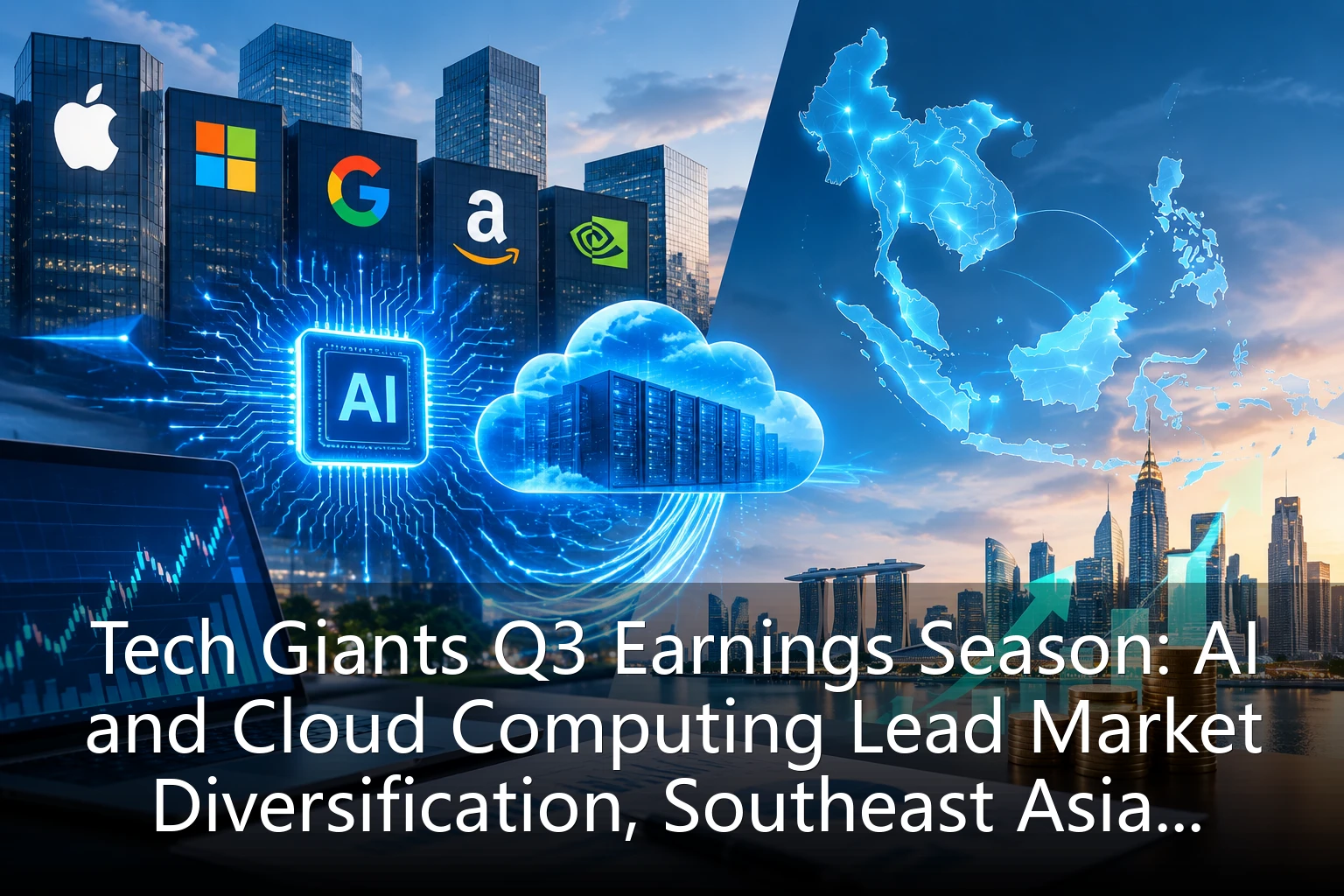
Recently, the U.S. stock market has once again been led by large-cap technology stocks. Among the highest-valued names, Apple rose more than 4% and set a new all-time high; Google, Meta and Amazon each gained more than 3%; Microsoft rose more than 2%; and Nvidia added 0.33%. In contrast, SpaceX fell 0.6% to $135.27 and briefly dropped below its $135 IPO reference price for the first time. This set of moves not only highlights the power of tech giants to drive the broader market, but also shows how investors are repricing the trade-off between certainty and valuation.
Body
1. Tech giants rise together, making mega-caps the market's core
Viewed on the tape, this rally was not the isolated performance of a few names, but a broad advance among major U.S. tech companies. Apple, Google, Meta, Amazon and Microsoft all sit near the top of the global market-cap rankings, and their share-price swings can directly influence the Nasdaq and even the S&P 500. When these leaders rise together, index gains tend to be more durable and more contagious.
Apple's move was the most striking. A record high signals renewed confidence in its product cycle, services business and ecosystem resilience. As one of the world's most valuable brands with massive cash generation, Apple is often read as a proxy for improved risk appetite. Meanwhile, the synchronized gains in Google, Meta and Amazon suggest that investors remain constructive on advertising, cloud, e-commerce and AI applications.
Microsoft's rise of more than 2% also underscores confidence in its cloud and AI strategy. Its combination of enterprise software, cloud services and AI infrastructure keeps it central to this tech-led rally. Nvidia's 0.33% gain was modest, but its elevated trading level still shows that the market continues to endorse the long-term AI hardware story, even if near-term upside has slowed.
2. Apple's record high reflects a repricing of the 'certainty premium'
Apple's climb to a new peak is grounded in a business model that combines stability with predictability. In uncertain environments, markets tend to favor companies with high margins, strong cash flow, brand moats and integrated ecosystems. Apple has a huge global user base, and the synergy between its hardware, software and services gives it strong pricing power even as competition intensifies.
From an investment perspective, the rally is not driven by a single product cycle alone; it reflects renewed recognition of Apple as a high-quality asset. When inflation, rates and growth all remain uncertain, capital tends to flow toward companies with stable earnings, reasonable valuations and lower drawdown risk. Apple's new high is a concentrated expression of that preference.
The move also signals a fresh reassessment of tech giants' earnings resilience. Some investors had worried that weaker consumer-electronics demand would hurt Apple, but its performance shows that a strong brand and ecosystem can buffer demand swings. For institutions, Apple is not only a growth name, but also a defensive allocation tool.
3. Meta, Google and Amazon are all stronger, and AI plus cloud remain the main themes
If Apple represents certainty, Meta, Google and Amazon represent re-accelerating growth. Meta's gains mainly reflect optimism about ad recovery and efficiency gains from AI. As the company keeps improving recommendation and ad-delivery models, margins still have room to improve.
Google's rise is closely tied to its search, cloud and generative-AI efforts. Although some have long feared AI could disrupt the traditional search model, the market is increasingly recognizing that Google has the traffic, technology and monetization power to adapt. Its strength shows investors are taking a longer-term view on AI competition rather than focusing only on near-term noise.
Amazon also deserves attention. As a giant driven by both e-commerce and cloud computing, it has broad reach on both the consumer and enterprise sides. With cloud competition stabilizing, investors are focusing on Amazon's earnings release potential and capital-expenditure efficiency. A gain of more than 3% suggests capital is still betting on its long-term profit runway.
Overall, these moves are not just a technical rebound. They reflect a broader revaluation of AI applications, platform efficiency and business-model evolution. In other words, the logic behind tech-stock gains has moved beyond storytelling and is now more about earnings delivery and cash-flow improvement.
4. Slower gains in Nvidia show the market is becoming more rational
Nvidia's 0.33% rise looks muted, but structurally it suggests the AI theme is moving from one-way enthusiasm to a more rational and selective phase. Nvidia once embodied the strongest AI investment trade, and its valuation had a powerful effect on market sentiment. Now that gains are slowing, it does not mean the thesis is broken; it more likely reflects normal consolidation after a very high level of expectations.
After a long run-up, the market now expects Nvidia not just to beat, but to deliver consistently. If earnings, orders, supply-demand balance or capex timing wobble, the stock can swing sharply. So the modest move suggests capital is not leaving AI, but rotating more carefully among the leaders.
For investors, this is important. It means the market is no longer in the early phase of chasing AI ideas broadly. It is entering a mid-to-late phase where actual profit growth, supply-chain positioning and valuation levels matter more. Going forward, the names that can keep delivering earnings growth and monetization are the most likely to attract capital.
5. SpaceX falling below its IPO price shows private-market valuations are also being reset
Against the backdrop of rising U.S. tech giants, SpaceX's decline carries symbolic weight. As one of the most watched high-valuation tech firms, SpaceX has long enjoyed a rich growth premium. But when its trading price approaches or falls below the issue benchmark, it suggests the market is re-evaluating even the most popular high-expectation assets.
That does not necessarily mean the company's fundamentals have deteriorated. More likely, it reflects adjustments in liquidity, valuation and risk appetite across private and secondary markets. Over the past few years, low-rate conditions pushed global capital markets to assign very high valuations to growth stocks. As the macro backdrop changes, investors are placing more weight on cash flow, time to monetization and earnings certainty. SpaceX's price move is part of that valuation reset.
Seen more broadly, the divergence between SpaceX and listed names like Apple and Microsoft reminds investors that high growth does not justify limitless valuation expansion. The market eventually returns to basics: revenue growth, profit conversion and return on capital.
Conclusion
Overall, this latest U.S. stock move has a clear structural character. Large-cap tech stocks rose together and lifted the indexes; Apple hit a record high and reinforced the appeal of high-quality assets; gains in Google, Meta, Amazon and Microsoft show that AI, cloud and platform economics remain the market's core themes; slower gains in Nvidia signal a more rational phase; and SpaceX falling below its IPO price offers a textbook example of high-valuation repricing.
For investors, three takeaways stand out. First, leading tech stocks remain the most important allocation theme in the U.S. market. Second, the AI rally is still alive, but the logic is shifting from concept-driven to earnings-driven. Third, expensive assets must face tougher fundamental scrutiny. In the months ahead, the key questions will be who is rising, why they are rising, and whether the move can last. Companies with real profit power, technical moats and closed-loop business models are likely to remain the market's focus.