


New York passes Mamdani’s pied-a-terre tax: rates and who pays
New York City’s new tax on second homes will more than double property taxes owed by many wealthy luxury apartment owners, according to tax experts.
State lawmakers passed the tax on nonprimary residences to help close the city’s budget gap. The so-called pied-a-terre tax will apply to second homes valued at $1 million or more, and is expected to raise $500 million in revenue.
Phased implementation and initial tax rates (2026-2028)
Details obtained by CNBC indicate the property tax takes effect in two phases. In the first two years—tax years 2026-2027 and 2027-2028—condos and co-ops valued at more than $1 million by the city’s Department of Finance are subject to the tax.
Properties valued between $1 million and $3 million would face a 4% annual tax. Homes valued between $3 million and $5 million would face a 5.25% tax. Properties above $5 million would face a 6.5% tax.
Experts say the tax appears large, but the city’s antiquated assessment and valuation system significantly undervalues properties, reducing the burden. They note city valuations can often be 10% or less of true market value.
Updated valuations and lower rates starting 2028-2029
Rather than overhaul the system immediately, the city will gradually update valuations—and the tax—according to budget documents. Starting in the 2028-2029 tax year, property values will be based on comparable sales.
Since valuations are expected to rise, tax rates will fall to compensate. After valuation adjustments, properties worth between $5 million and $15 million will be taxed at 0.8%. Properties between $15 million and $25 million will be taxed at 1.05%. Homes over $25 million will be taxed at 1.3%, according to the budget plan.
“It’s incredibly complicated,” said Robert Pollack, a New York property tax attorney with Marcus and Pollack LLP.
Ken Griffin’s estimated impact under the new rules

Billionaire and Citadel CEO Ken Griffin became the public face of the tax after New York City Mayor Zohran Mamdani posted a video in front of Griffin’s penthouse announcing the tax. Griffin responded by threatening to pull back business and jobs from New York in the future.
Under the new tax, Griffin—who is a tax resident of Florida—would see his Manhattan property tax bill more than triple, according to CNBC calculations.
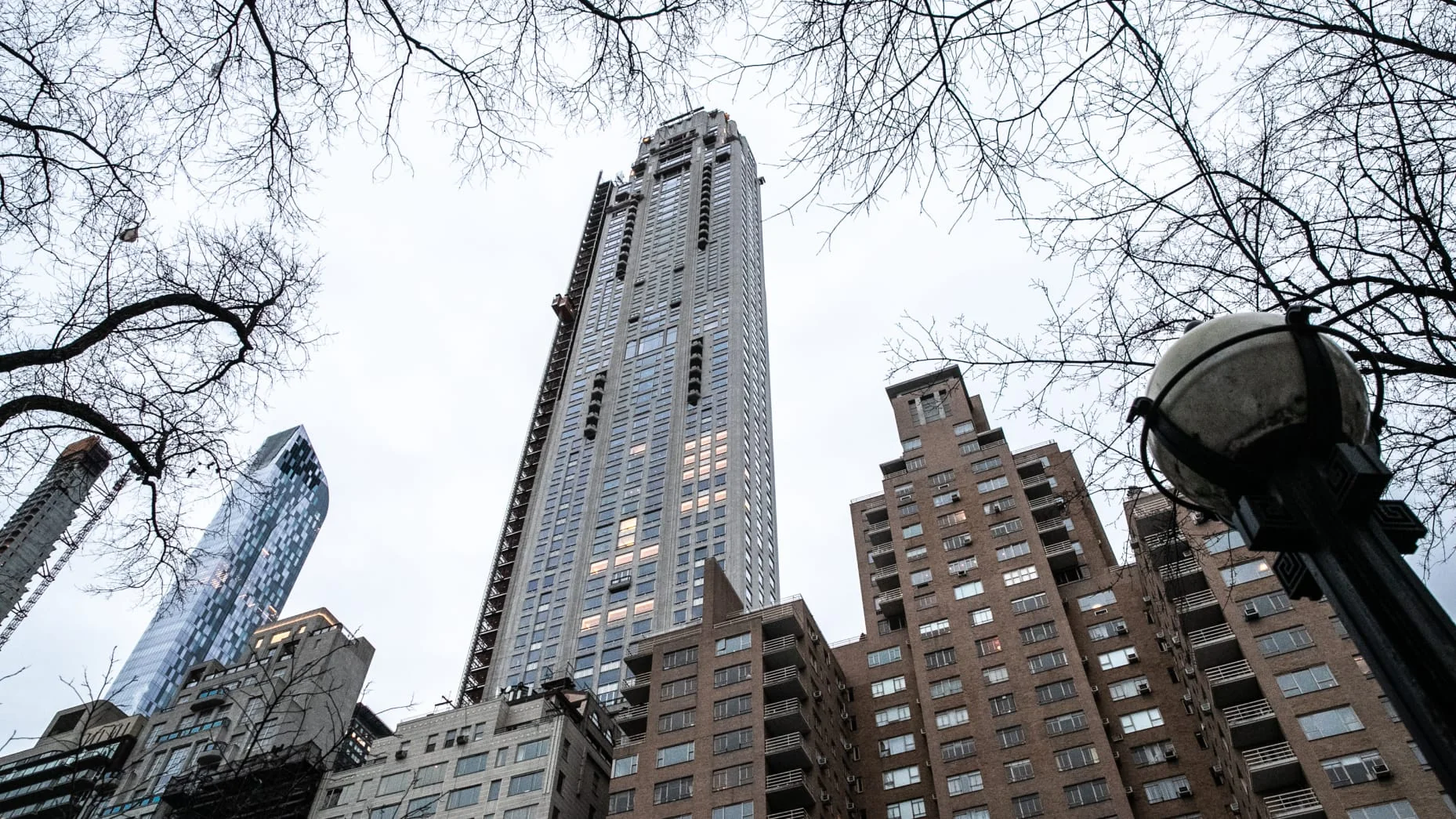
Griffin purchased his 24,000-square-foot penthouse at 220 Central Park South in 2019 for $238 million. Government records show the city values the apartment at $15.5 million. Griffin’s property tax bill for the 2026-2027 tax year is $858,332, according to city records.
In the first two years of the pied-a-terre tax, Griffin’s property tax bill would more than double to $1.87 million, according to Pollack. Starting in the 2028-2029 tax year, it would increase to just under $4 million.
Griffin also purchased two apartments at 740 Park Ave. for a total of $83 million, according to reports. The tax on those units would be $1.1 million starting in 2028, bringing his total Manhattan property tax bill for all his properties to more than $5 million.
While city politicians say the wealthy can afford it, real estate brokers and tax attorneys warn about significant “sticker shock.” Pollack said many clients already feel they pay too much and that the numbers are substantial, regardless of how wealthy someone is.