

Hormuz Strait Tensions Escalate as US-Iran Clash Sends Shockwaves Through Markets
Keywords: Hormuz Strait, US-Iran tensions, Middle East risk, semiconductor stocks, AI capital spending, inflation pressure, Federal Reserve, market volatility
Introduction
Tensions in the Middle East have once again moved to the center of global attention. The situation around the Strait of Hormuz, one of the world’s most strategically important shipping lanes, has sharply deteriorated after the United States said it launched strikes against Iran in response to an earlier attack on a commercial vessel. Iran, in turn, claimed it targeted multiple US deployment sites in the region.
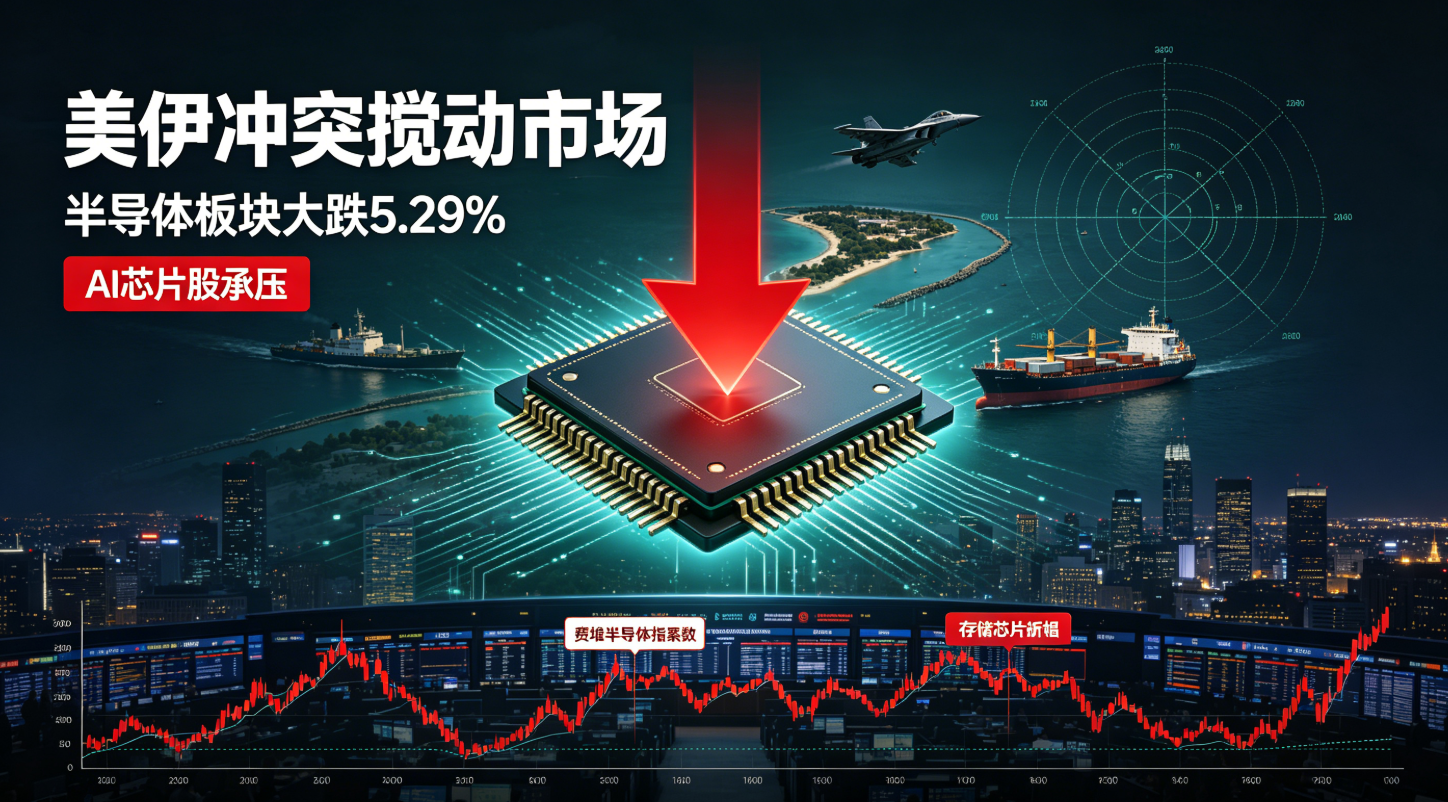
The renewed confrontation has not only raised geopolitical concerns but also unsettled financial markets. While major US equity indexes posted only modest declines, the semiconductor sector suffered a severe selloff, underscoring how quickly investors can shift away from risk when uncertainty rises. The episode also highlights a broader dilemma for markets: even as artificial intelligence continues to drive long-term optimism, the cost of that race is growing harder to ignore.
Military Escalation Raises Global Shipping Risks
According to the US Central Command, American forces struck Iran’s missile and drone storage facilities, as well as coastal radar positions, on June 26. The action followed the reported drone attack on a cargo ship traveling near the Strait of Hormuz. Washington said its response was designed to protect commercial shipping and preserve safe passage through the corridor.
Iran’s response was equally forceful in rhetoric, with local media reporting that the Islamic Revolutionary Guard Corps attacked multiple US positions in the region. Tehran later denied that some of the statements circulating online were genuine, calling them fabricated. Even so, the back-and-forth has revived fears that a maritime dispute could broaden into a more serious regional confrontation.
The Strait of Hormuz is not simply a regional chokepoint; it is a critical artery for global energy and trade flows. Any sustained disruption there would have consequences far beyond the Middle East, affecting oil prices, freight costs, insurance premiums, and overall market sentiment. For investors, the renewed instability serves as a reminder that geopolitical risk can quickly spill into asset prices, especially when the world economy is already sensitive to inflation and interest-rate expectations.
Markets Turn Cautious as Semiconductor Stocks Lead the Selloff
US equities ended the session with only small losses, but beneath the surface the market showed clear signs of stress. The S&P 500 slipped 0.05%, the Nasdaq fell 0.24%, and the Dow edged down 0.09%. The broader indexes appeared relatively calm, yet the technology complex told a different story.
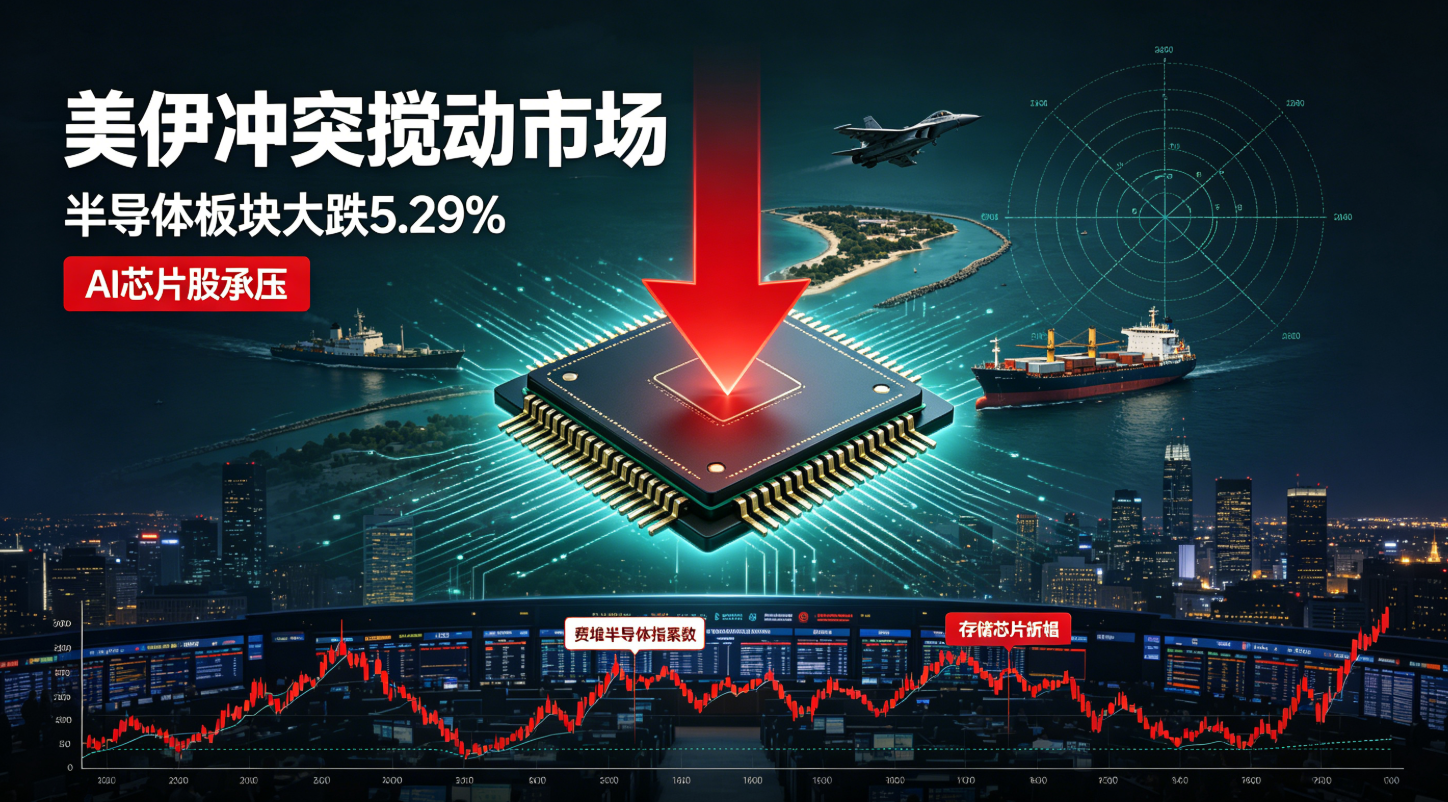
Semiconductors were hit particularly hard. The Philadelphia Semiconductor Index dropped 5.29%, and every constituent closed lower. Onsemi plunged more than 23% after announcing a planned all-stock acquisition of Synaptics, while Texas Instruments, Qualcomm, NXP, Micron, and Applied Materials all declined sharply. Memory-related names such as Western Digital, Seagate, and SanDisk were among the biggest losers.
The selloff was notable because chipmakers have been among the strongest beneficiaries of the artificial intelligence boom. Demand for processors, memory, and advanced manufacturing equipment has been driven by expectations that AI infrastructure will require massive and sustained investment. However, investors are increasingly asking a tougher question: how long will it take for those enormous capital expenditures to translate into earnings?
AI Optimism Meets Capital Expenditure Reality
For much of the past two years, the AI narrative has supported a powerful rally in large technology stocks and chip manufacturers. The logic has been straightforward: as companies and cloud providers build data centers to train and deploy AI models, semiconductor demand should remain elevated for years.
But markets are now wrestling with a second-order concern. Heavy upfront spending does not automatically guarantee near-term returns, and some investors are beginning to question whether the pace of investment is outrunning the pace of monetization. Reports that OpenAI may delay its initial public offering until next year added another layer of caution, reinforcing doubts about how quickly the AI ecosystem can convert hype into durable profitability.
David Stubbs, chief investment strategist at AlphaCore Wealth Advisory, noted that it is still too early to call a major correction in technology shares, but he warned that skepticism about AI earnings power and the return on capital will not disappear soon. That caution reflects a broader shift in sentiment: investors are still willing to believe in AI’s long-term potential, but they are becoming more selective about valuation, timing, and execution risk.
At the same time, not all technology stocks moved lower. Microsoft surged more than 5%, and Apple gained over 3%, while Amazon, Meta, and Tesla also advanced. This divergence suggests that the market is differentiating between companies with proven cash flow and those whose upside depends more heavily on future expectations. In periods of stress, investors tend to rotate toward balance-sheet strength and away from speculative growth.
Inflation, Supply Chains, and the Fed’s Policy Dilemma
The geopolitical shock is also landing at a sensitive moment for monetary policy. Although oil prices have eased as tensions temporarily cooled, the possibility of renewed disruption in the Gulf remains a source of inflation risk. Higher shipping costs, tighter logistics, and elevated insurance premiums can all feed into prices if the situation worsens.
Art Hogan of B. Riley Wealth argued that Apple’s price increases are a reminder that inflationary pressures have not fully disappeared. He compared the current environment to the pandemic-era supply chain disruptions, when shortages in key components drove costs higher across the economy. In his view, the AI hardware cycle may be producing a similar kind of supply-side pressure, this time centered on memory and advanced chips.
That concern intersects with a broader shift in central bank thinking. Minneapolis Federal Reserve President Neel Kashkari said he has revised his policy outlook and now sees a possible rate increase this year, rather than a cut. His comments reflect the Fed’s continued focus on data dependence and the risk that inflation could reaccelerate if external shocks become persistent.
For markets, that combination is uncomfortable: geopolitical instability may support energy prices, supply chain strain may pressure manufacturing costs, and the Fed may remain reluctant to ease policy quickly. In such an environment, equity valuations—especially in high-growth sectors—are more vulnerable to disappointment.
Conclusion
The latest events around the Strait of Hormuz reveal how tightly linked geopolitics and market structure have become. A single maritime incident has escalated into military strikes, retaliation claims, and a sharp repricing in one of the market’s most crowded trades: semiconductors and AI-related stocks.
The message for investors is not that the AI story has ended, but that the market is entering a more demanding phase. Earnings durability, capital efficiency, and pricing power matter more when geopolitical risk rises and inflation fears reappear. At the same time, the Hormuz Strait remains a reminder that energy, trade, and financial markets are still vulnerable to sudden shocks.
For now, the situation remains fluid. But one thing is clear: when tensions rise in this narrow waterway, the effects are never limited to the Middle East. They ripple across supply chains, bond yields, and equity valuations worldwide.